

For some reason SAPE links has not been touched by Google’s nasty magic ban wand but it looks like after a lot of chatter via SEO forums, Matt Cutts is a coming for them. While I hope no legit business has been running these links because if so, I’d get on the disavow train pretty quick. The majority of the other people I imagine are affiliate sites than an just turn and burn as they say. Either way, if you’re relying on lame link building like this for your legit business and want to stop, give me a shout to hear how we do it right.
Link Building
SAPE Links – Google’s Coming For You
Comments Off on SAPE Links – Google’s Coming For You
February 16 | Link Building | Ryan Clark
Tagged google penalty, matt cutts, Paid Links
Linking For More Powerful Social Media Profiles
Comments Off on Linking For More Powerful Social Media Profiles
October 16 | Link Building | Ryan Clark
 We just got done working with a client who was on a 6 month contract with us to help launch and keep afloat a new business in a local market. This company went through all the good stuff, and while this is not a local SEO post by any means, we’re going to cover something that’s often overlooked and left out in an inbound marketing campaign. So what am I talking about? Well, I’m not sure if it has a proper name, but we’re going to look at building links to your second tier properties – aka your social media accounts.
I’ll start by saying I am definitely not talking about link spamming your damn near un-utilized Pinterest account so it gets 1000 blog comment links. What I am talking about is utilizing your web presence to make sure that all of your highly-used social media profiles are linked up the best they can be. This is course has two benefits:
1) Your social media accounts are there to create content and network, and that content can rank easily for highly profitable long tail keywords. Your Pinterest Pins, your Tweets, your Facebook Page Notes, your Youtube videos and more can and will get indexed, so why not make them rank? Who wouldn’t love not only to have their website in the top 10 SERPs, but 2-4 other pieces of high quality unique content spread across your social web as well?
2) Providing highly targeted, awesome content for your niche to your sites will attract more shares and followers… Duh.
Let’s Get Linking
I’m sure you’ve noticed by now that a lot of social media sites allow links to your other social media profiles, and that’s mainly what I’m talking about. I don’t care if it’s a followed, no followed or cloaked link because we want anything that will bring a visitor back to your other marketing channels. But don’t worry, a lot of the links you can snag will be followed and count towards making your other profiles that more “authoritative”.
I’m not advocating that you go and create 100 social media profiles just for the links, as that will never work… Well, not unless you’re a company with 20 social media employees that can handle actually being a part of those communities. Without a well-built social media profile, you won’t get much benefit form having a ton of empty/barely used profiles… Plus, it looks sloppy.
I’ll keep this pretty simple and straight forward, as you know how I can ramble on and on and on and… Alright, I’m shutting up. I will list a few examples just to get your minds going and let you take it from there. Just sit down and visualize social networks you are utilizing now, then make a list of the ones you have time to join and participate in.
The Usual Suspects
 I’ve started to see a lot of companies push two links from their bio line and this is not a horrific idea. I’d be inclined to list your website and Facebook account… Or whatever are your most important ones. There are also a ton of web-based Twitter apps that pull your profile data – including the link – and add it in there. If you’re active enough on Twitter, a ton of those third tier profiles will stay indexed. There are also tons of websites now utilizing their user account creation through Twitter authorization, and your data will be pulled in from that as well. For example, our Inbound.org member profile links to our Twitter.
About.me:

This is the perfect example of an authoritative social media network, and while it’s mostly just a business card, it is nevertheless a place I’d want my social links on. You can build a nice little branded profile here and link to just about anything you want, and it even pulls in your other social media content via their “app system”.
Flavors.me
This is essentially the same thing as About.me, and I apologize as I don’t know which one launched first, but they are both cool. I cannot imagine Google loves this kind of site all that much, as it might be seen as “SERP Pollution”. As it stands right now, there are about a million profile pages indexed in the SERPs, so why not take advantage?

 TheFancy & Pinterest: I’m a huge fan of TheFancy, even more so than Pinterest, and while it doesn’t have half the traffic as the big pin, it’s a site worth marketing on. We utilize it for our luxury marketing company, as Linkbuildr itself doesn’t need to be marketing fancy pictures of products and things. You get the option to link to the usual suspects but definitely not to your Pinterest account.
Pinterest has the same kind of setup, as you can see from our account here. These two sites are great for the right type of business and it’s a place where you definitely want to link to more than just your website. I’m not kidding when I say a lot of brands just don’t bother to link up their other profiles better, with a perfect example of that being Nordstrom’s Pinterest profile. They only link their website but you know a brand that big will be heavy on Twitter, Facebook and Youtube as well. We have ours set up (for Luxury Branded) but we’re not exactly as active as we should could be on The Fancy.
Directories: Looking back at my post Link Building Tactics in 2011, I mention these three directories that are examples of hand built links that won’t get you into trouble. There are other sites like this, but for our post here we’ll use these three for the sake of getting my point across.
Manta.com
Manta has an awesome option for linking and listing your social media profiles, and looking at SEOMoz’s profile page for our example shows what I mean. You can also add links in your bio besides your homepage, and this is just the extra benefit. Besides that, being listed on this business network will send you leads…. Hint hint!

CrunchBase
 This is another great place you’re going to want to have a company listing from, as it’s something that provides a whole lot of information and services. It’s also a social place that gives you options to connect with other businesses and link to your social accounts.
Utilizing Key Areas Of Your Content
We’ll take a look at what you control that you can use easily for pushing some worthy link juice over to the right profiles. This should have been first on the list here, as you can get right to it and quickly be on your way worrying about other more important tasks. The key places I like to do myself and recommend to clients are:
Author Bios: This is so painfully obvious that I cringe having to write about it. While your blog is the go-to spot, I’m also talking about making sure the right links are located in your guest blogging bio’s as well. If you’re an avid guest blogger then this is an extra boost that will surely help, as well as bring in more followers to your most important social profiles. In the picture below I just utilize Twitter and Google+ but by the looks of it I could make it look prettier to attract more followers.
 Utilizing Your Website: Besides the author bios, I like to make sure the right pages are going to be linking out like your homepage, “contact” pages (or “about us”) and the sidebar of your brand’s blog. Those are all the right spots without being intrusive to your readers. Those pages should also send a good amount of link juice over, although I know a lot of folks noindex their “about us” and “contact” pages.
Viral Campaigns Are The Best Option
A lot of companies have been utilizing Facebook and Twitter for viral marketing efforts whether that be a contest, a sweepstakes or just damn good content. So this is obviously the best method for getting links to those accounts naturally and by the boat load. Pinterest, being the latest social media all star on the block, has already seen a lot of contest action, there is even a Pinboard for contests on Pinterest.

Real World Results For SERP Domination
Ok, so to illustrate this whole picture in your head as clearly as possible, we can take a look at real SERP results to showcase just what I’m really talking about. You can literally have multiple top 10 results that all funnel back to your brand if you have the right things in place. Taking advantage of other social media networks while they’re hot and authoritative can lead to a lot more traffic, especially if you jump on keywords that are emerging and trending. The one big downside to this is if that social media site drops from its strong position with Google, your content marketing efforts will now be lost. But don’t worry, there will be another social network rock star coming out next month.
So sticking to Pinterest here as an example, we can look at the search term 2012 Halloween Contest and this is what I get at no 1:

While not the most exciting of results, lets take a look at how the retail world can benefit from unique and/or cool content powered by social networks. I find that Pinboards rank better than the pins themselves, mainly because of the constant action changing on these boards, as well as the amount of internal links. You’ll find Pinterest pins will rank much better if they’ve hit the front page and have had a lot of activity. I am going to totally pick keywords at random here, and hopefully they serve the purpose needed. I recently got a luxury cat bed hot on Pinterest and TheFancy for fun, so let’s see what we have in the SERPs.

This is a great example of how a pin board can rank well albeit, this is not the most competitive of keywords. As for user experience, who wouldn’t want to shop for their cat’s luxury bed by browsing that pinboard? Ok, so I’ve talked enough about Pinterest and I’ll let you explore it more, so let’s talk about ranking Videos, Tweets and Facebook Page Notes.
Youtube Is A Marketing Weapon
Don’t be afraid to use it, and please for the love of spaghetti monster, don’t make a picture slideshow video. I’m a watch guy and say I was in the market for a 2012 model from Breitling. I’m most definitely going to hit the videos first as I’m going to want to see reviews in motion from professionals in the industry. Naturally you’re going to find videos ranking for these terms, and if not you’re at an advantage being a shop that sells them.

Taking something more current and of the times, we can look at a keyword that is going to bring in a lot of organic search traffic over the next few months. The Samsung Galaxy S3 phone is something that’s crazy popular and the folks at PhoneArena.com did a 25 minute long video review of it. On a side note, check out their text based review as it’s a shining example of how to do amazing content.
This video gets people talking, links to their review on the site, and in the end this video will go to over 1 million views come Christmas… Easy! Oh, and how did I find it? It ranks high for the search term “samsung galaxy siii review” on Google, although you can find them in the top 10 on Bing as well!

Tweets CAN Rank
I’ve been noticing tweets showing up more and more in the long tail lately and if you have an authoritative account, this can be used to your advantage. From what I can tell, the reason they can rank quite well is because A) you’re getting a lot of reTweets on that update and B) a lot of Twitter apps pull your tweets and display them on their app site, which is really linking back to your original Tweet. I imagine that it will have to be a very specific type of search query to be able to rank well, so take notice of when, where and why they show up in your searches.
Just to give you an idea of how Tweets can rank, as well lead to other Twitter powered apps to rank the content, let’s take just one thing @GuyKawasaki tweeted about in the past month and see what we come up with in Google.

Keep Your Eyes Peeled
I don’t really have much else to say other than take notice as to what ranks within your vertical for all types of search queries that will bring in revenue for your business. Keep your content unique and high quality when playing around with this tactic as you’ll be rewarded in the long run. I know that sounds lame and perhaps it’s been over-stated, but if you’re building a brand for the long haul, don’t skimp.
Tagged Link Building, social media marketing
Google Link Disavow Tool Launches
Comments Off on Google Link Disavow Tool Launches
October 16 | Link Building | Ryan Clark
A lot of people have been screaming and bitching about Google launching their link disavow tool and well folks, it’s finally here. Matt goes on to say that “most people shouldn’t need to use this”, unless you’ve been mass spamming and using blog networks etc etc etc. I will be doing a video soon for our new inbound marketing podcast where we use the tool to clean up a test site we had hit on purpose, and we’ll see what happens. Matt also does say that this tool will disavow the bad links, but it will take weeks for Google to re-crawl and re-evaluate your “juice” so to speak.
Tagged google, Link Building, matt cutts
Spam Still King In Google SERPs
Comments Off on Spam Still King In Google SERPs
October 11 | Link Building | Ryan Clark
So we’ve had a Panda, Penguin and EMD update all within the past 30 days, the Google search results should be pretty clean right? We most definitely shouldn’t be seeing link spammed, keyword stuffed, EMD based 3-5 page max websites ranking for some of the most lucrative keywords…right?
Well I decided to check one of those keywords for the sake of seeing what’s going on and it seems even worse than last month to be honest. Below are my results for the keyword “payday loans online”, so obviously these won’t be the same everywhere. I’d like to hear what you folks are seeing because one of out ten results being an actual brand is kind of scary. The majority of the results crossed out below all had thousands of links dumped at it within the past month. As well, they only have 3-5 pages max so you’d like one of these updates took out these kinds of sites?

This is laughable to say the least although the latest Penguin update was just a refresh, and not a tweak to the algorithm itself(correct me if I’m wrong on that one though). Matt has been caught saying that the next real update will be “jarring and jolting”, so we’ll see what’s up in the coming months. I imagine they’re trying to get these updates out of the way before the holiday
What about non-shopping results?
While not every top 10 result is going to be this bad, but I just keep saving searches I come across as a user and this was a recent find of mine. I have a BenQ projector and recently had to figure out what was going wrong with it and how I could fix it. You’d think BenQ would come up on the first page, but instead it’s 99% FixYa and their pages are mostly just disguised Adsense ads and no real fix for anything.

More so annoyed more than anything really….link to your crazy search results in the comments below if you have something to share.
Google Adds To Their Link Schemes Page
Comments Off on Google Adds To Their Link Schemes Page
October 9 | Link Building | Ryan Clark
I recently noticed that Google has added some more rules to their Link Schemes page, so I thought I’d alert others and break down what I see that’s new. While I’m happy to see some more clarity in what not to do link building-wise, there are still a lot of unclear tactics left off the menu.

I can tell you from experience that not a whole lot of people have read this page, and as someone who does inbound marketing, you should. Google’s updates this year have thrown a lot of people for a loop, especially when it comes to building/attracting/buying/stealing links to your website. While I think a lot of it still has to do with anchor text ratios and not so much link types (yet), why bother building junk when you can attract gold?
Ok, So What’s New?
Buying or selling links that pass PageRank. This includes exchanging money for links, or posts that contain links; exchanging goods or services for links; or sending someone a “free” product in exchange for them writing about it and including a link
I may be wrong on this one, but there seems to be some new words added to this paragraph this time around, mainly the part about sending someone a “free” product in exchange for a link. Sending a product to the biggest bloggers in your vertical so they can give an honest review is a great way to get feedback on your goods. While you may get a link in your review, you should certainly be getting social media signals, pictures and hopefully video content from the reviewer. Google shouldn’t have any say in this form of marketing as it’s completely natural to me. I’d just make sure you don’t have the reviewer give you any special anchor text other than “view website/site/brand name” etc.
Using automated programs or services to create links to your site
This was a much-needed addition, as there are SO many people using automated scripts and tools to mass create links. You know the usual suspects like Xrumer, SENuke and Scrapebox. 99% of the “SEO Services” you find on webmaster forums are usually done with some sort of software and it’s ALWAYS spam. Even SENuke.com may need to change some of the copy on their website after seeing this one.

Questionable, to say the least…
Links that are inserted into articles with little coherence, for example: most people sleep at night. you can buy cheap blankets at shops. a blanket keeps you warm at night. you can also buy a wholesale heater. It produces more warmth and you can just turn it off in summer when you are going on france vacation.
This is fairly obvious and I imagine their AI can detect this kind of stuff by now… Well, at least in a timely manner. I wish I could properly do a study to see how many “robot made” articles have been published on open article sites and web 2.0 properties. If you run a forum or UGC-based site, you more than likely deal with this crap on a daily basis. For those still utilizing something like this in their strategy, it’s going to be a wild ride if your income relies on this method. While it may boost your rankings for a while, I’d certainly not want tens of thousands of “un-cleanable” links out in the wild.
Low-quality directory or bookmark site links
This is a another obvious hit on the list, although notice the choice word of “low-quality”; this still leaves a lot of room for interpretation. I know a lot of folks don’t like the idea of Google determining what is not of the utmost quality, but it’s their search engine so some sort of line has to be drawn.
We on occasion will recommend some directories for clients, it all just depends on the situation. There are a lot of city/location-based directories that are useful for the traffic, never mind the link. Let’s say, for example, that I’m a local car dealership – there are going to be options for links that are vertical-specific, and which also provide more value than just a link. A perfect example being Dealerrater.com, which provides real user reviews for each specific dealer.
As for social bookmarking, just stick to the most active sites by creating worthy content. There are tons and tons of bookmark sites made with Plugg or Scuttle, and that’s what you have to steer clear of. What’s the point of trying to keep thousands of ultra low quality pages indexed for a lousy link? Putting your time and effort into, say, good content and Reddit, would pay off to a much greater degree.
Redbull is a corporation that does a bang up job creating content, and they have a hot link on Reddit daily, most often multiple times! The end goal is to draw more “fans” into their brand and this is when you start experiencing the life beyond Google’s organic search traffic.

Links embedded in widgets that are distributed across various sites, for example:
Visitors to this page: 1,472
car insurance
I like to usually follow three rules when someone wants to utilize widgets as part of their link strategy. The first being that you should create something unique and useful, and not another loan calculator or phony badge. Second, you should most likely slap a nofollow tag on that link. Lastly, do not use a “money anchor text” for your link, just stick to a site/brand name link.
Widely distributed links in the footers of various sites
I’ve heard a lot of people come into trouble with themes for the likes of WordPress and Joomla. The problem here being a money anchor text as the link in the footer, and this is a clear manipulation of Google’s algorithm. If you’re a theme developer then I don’t see any problems coming from a tactic like this, just stick to nofollow and the site/brand link again. There’s nothing wrong with providing something awesome for free and getting something in return. If you’re not a web designer, I’d steer clear of developing a theme just for the footer links… There are better things you can do with your time and money.
Forum comments with optimized links in the post or signature, for example:
Thanks, that’s great info!
– Paul
paul’s pizza san diego pizza best pizza san diego
The easiest targets out there are forums and blogs, because the platforms are almost all the same, and they’re easily exploited via AI. Forums are great for marketing, but the last thing to worry about is a link! There are better ways of getting legit forum ROI by being a part of the community openly. Any large forums in your niche also have advertising options, so don’t waste your time trying to blast links on forums. This makes your business look bad, and it creates a giant mess you’ll eventually have to clean up… Assuming Google does come out with that link ignore feature.
Creating Amazing Content is Truly Worth It in the Long Run
I’m perhaps sounding like a Google fan boy right now, but if you want to play ball and get that free traffic, you might as well play by most of the rules.
The best way to get other sites to create relevant links to yours is to create unique, relevant content that can quickly gain popularity in the Internet community.
It is not only the number of links you have pointing to your site that matters, but also the quality and relevance of those links.
It all comes down to you wanting to continue that traffic flow, which hopefully is converting into sales. I think the worst part is that if you do get to the top 10 by spamming, you’ll have 9 other people analyzing your links and looking for a reason to report you. So, continue focusing on doing the things that make you stand out from all the rest; this is where you’ll find success in the long run.
Tagged google, Link Building, link schemes
Stop Building Links And Start Attracting Them
Comments Off on Stop Building Links And Start Attracting Them
October 5 | Link Building | Ryan Clark
Since the year is getting close to being done, I thought another large link building post is in order – although we could have called it “Attracting Links in 2013” just as easily. To be honest, there isn’t a whole lot of new information out there so I’ll do my best to recap on everything that’s been working great for our clients. It has been the craziest year for inbound marketing companies, mainly due to all the hype surrounding Google’s Panda and Penguin updates. While I still see link spammers ranking even faster and higher post-Penguin, there is a clear and strong signal coming from the link profiles of brands that haven’t felt a pinch of the flightless bird.
 For us here at Linkbuildr, not much has changed in regards to our strategies as our mentality has always been “Think Beyond The Link”. While our name suggests we just build links, that could not be further from the truth. We tend to focus on content marketing that attracts not only links but social followers as well, thus helping to establish our clients as leaders in their vertical.
I will go into what we see – and mainly what I think – but as with any advice from “SEO Gurus”, do your own research and check everything. I’m not always going to be 100% correct or even 80% correct, for that matter… I don’t know all of the secrets of Google’s algorithm (no marketers do), so all I can do is take note of what’s worked for us and focus on doing things that get great results for our clients.
Skip My Ranting And Jump To Part 2: What We’re Doing To Attract Links
What Link Analysis Has Taught Me
Those illuminated in the ways of ranking well know that large numbers of anchor text links have been the major reason a site will rank for said keyword. Not everyone will agree with me on this, but I don’t really care nor am I in the business of NOT ranking clients’ websites. You can go to any car insurance, payday loan or Viagra SERP result and see 2-page websites ranking in the top 10 that have gotten there in a matter of weeks. I literally just went to the first 10 Google SERPs for “payday loans” and ranking high in the results was spam… Actually half of the listings are there because of link spam. Remember how I also mentioned link spammers are ranking faster than ever? Check this:

Pardon my language but this is a complete f$#%ing joke. Penguin does absolutely nothing against this for at least a few months, and mission critical results needed by people are not being met. Matt Cutts and the search quality team obviously know about this and I imagine Penguin or another update will factor in new elements to put a stop to this. Perhaps my F-Bomb was a little harsh, as I imagine making the tweak to the algorithm so that it doesn’t bowl over a million other legitimate websites in the process is probably quite tricky, but still: this problem needs to be addressed by Google.
Stop Caring About Anchor Text Completely
Stop now… Seriously! Since our first week helping clients, we’ve always stuck to not caring at all about what anchor text they got. Our main focus is on creating amazing content that attracts links naturally. It’s not a cheap strategy and usually we like to think that “slow and steady wins the race” when it comes to building a brand. Obviously, a viral marketing campaign is going to flood in natural links from all types of places, and while that’s all fine and dandy, it’s not going to make you rank for everything after one go. That’s the type of content you need to be doing every month for as long as your business is running with its feet on the ground.
From my thousands of hours pouring over backlink data I’ve noticed one very important aspect to ranking really well and staying that way for years: anchor text ratios. Sites that are doing what Wil Reynolds from SEER has coined “real company shit” are not getting caught up in Penguin or any other link issue. This is what their link profile looks like, and if you go to any of the top 10 search results for any big keyword, you will notice this too. This is what a proper anchor text scenario should look like:

Not All Hand Built Links Are Bad
I’m quite active on all the SEO forums, LinkedIn, Reddit.com/r/SEO and other places and I see a lot of fear in regards to building links without earning them. 99% of the time these folks have been doing nothing but spam anyways, but definitely don’t think that just because you built a link yourself that you’ll get penalized for it.
Going back to anchor text abuse yet again, you’ll want to avoid picking any anchor text besides your brand/site name or something that makes sense… Don’t be spammy. This means you’re not influencing your own ranking for a targeted keyword. You may not get the best result (sorry to say), so working on everything other than a spam blast of anchor text links will be needed to earn it. While I may be just giving link spammers the idea to blast blog comments, forum profiles and junk directories with brand anchor text, it won’t work for long. I mentioned that Google knows their faults and as we’ve seen in a Google patent, that junk link detection is coming and it’s going to be nasty.
Depending on what type of company you are, what kind of products you have, and the type of content you’re producing, you need to figure out which unique link opportunities will most require your attention. I think the major difference between you going out and building low quality links and – say – listing your public company on Yahoo Finance is the reason why. Junk links blasted out in the thousands from private blog networks, blog comments and forum spam not only waste people’s time, but its soul purpose is to inflate your own rankings.
A tech startup should be listed in Crunchbase.com, a skateboarding company should be in a skateboarding directory, your iPhone app should be listed in app sites… See what I’m getting at? Now that I’ve explained that, let’s take a look at real examples so we all get a better idea of a proper and naughty hand (or robot) placed link.
Ze Robots Attack!
 Automated link spam is a huge problem and mostly resides in two scenarios in the wild. Firstly, affiliate marketers trying to earn gobs of cash are always throwing down with the likes of Scrapebox, Xrumer or any service you’d find in a SEO/Webmaster forum. The second scenario, and the one that bugs me the most, are SEO companies who utilize these tools and other junk like paid blog posts on clients who have no idea what they’ve just paid for. That’s partly the fault of the company not doing its research beforehand, as well as Google displaying bad marketing at the top of the SERPS. If you do a quick search for “white hat link building” right now, all the ads are selling low quality services that will get you in trouble eventually.
** A note to the Google webspam team as of 09/21/2012 that if we get an unnatural links penalty for this I’m going to be pissed :)
I don’t want to out anyone so I won’t, but use our other site Luxury Branded as an example of Scrapebox and Xrumer at work. Why that site? Well, we first started it off running BuddyPress and soon learned that automated spam bots were too much to handle and we had to kill it and go back to standard WordPress. I started noticing huge jumps in our backlink profile when we had been doing nothing but content marketing. The worst part is that one of the spammers was trying to rank for “preeteen underwear model porn” that’s WAY ILLEGAL and so disgusting that I had to send our logs to the FBI cybercrime division.
Xrumer At Work

So the spammer’s member profile page had a bunch of spam links and dupe content dropped on our site, and from there they spammed that page all over the place. After that happened, we then noticed Scrapebox going to work and it was dropping comments all over the place to the member page and all the other spam hubs this person had set up. It was just the start of the spammer’s efforts, so they weren’t quite ranking just yet.
I tracked the spammer back to their “money site” and saw a shining example of link spam, although it was very diverse in regards to the types of links and anchor text being employed. I think it’s pretty safe to say they’re most likely a member of Blackhat World or Warrior Forum, as the link profile looked like a service you see offered all the time in those forums. Here’s some ad copy from one of those services:
Spammy Links

A Natural Link


I’ll continue on with a tech startup as an example, and since I’m not outing anything but a normal good link that will send referral traffic and some link juice, I’ll give the example company a natural link. I cannot think of a better place to get all the benefits of a mention for a tech startup than Mashable’s Startup section. On the front page today is Soldsie which launched on Wednesday (read our post on launch bait) and they got some huge coverage.
This kind of link has lead to them being re-blogged a ton, as well as receiving a plethora of social buzz which has shot their Twitter follower number into the thousands. It’s too early to grab a link graph even from Ahrefs, but we can take a look at who’s covered their launch via an easy and quick Google search. Either way, they’re off to a great start and business should be booming for them in the coming month, so kudos and good luck to the team @Soldsie.
Down the road I imagine they’ll be listed with a Wikipedia page, an Aboutus.org page, in Tech Crunch an all over naturally… Some of which they might have to build themselves. So long as they don’t try and influence their anchor text keywords, they’ll do just fine. You can refer to some of our older posts which cover tons of link building ideas that you have to do by hand, but you need to be a legit business to benefit from it. I recommend you read:
- Link Building Beyond The Bullsh*t
- Link Building Tactics In 2011: Keeping It Fresh
- Ecommerce Link Building Strategies & Tactics
- Infographic Marketing Strategies For Links & Brand Buzz
Read Part 2: What We’re Doing To Attract Links
Tagged Link Building, linkbait, Viral Marketing
Start Choosing the Most Profitable Link Prospects for Guest Posting
Comments Off on Start Choosing the Most Profitable Link Prospects for Guest Posting
October 2 | Link Building | James Piper
Choosing which link prospects will provide the best return on investment is an overlooked element in the link building industry. Too often, the single factor when weighing profitability of a link prospect is domain authority. In fact, SEO agencies have been known to pay freelancers to link build — with compensation solely based on DA… however, if you are building links for REVENUE, and not solely based on rankings, you really need to take other elements into thought.

1. Relevancy
Writing high-quality content takes up time, brainpower, and can really be a daunting task. While the hard work will be incredibly rewarding, you can lighten the heavy lifting by targeting blogs relevant to your subject and are also likely to accept a guest post. This will always be the first step while you’re evaluating your link prospects, and here are some techniques to test if you have landed on the right spot:
- Relevancy is essential, but it doesn’t always have to directly target your niche. For example, if your team just pumped out fifteen articles about video games, give them a break and target Zombie blogs. It gives your writers a chance to write on a fresh subject, and you’ll be given the opportunity to target the Zombie market – which most likely is similar to the video game market.
- Advanced search – site:prospect.com + guest
- Shows if someone has guest authored here before.
- If not, in the email include something such as I did not see any existing guest posts on your website, and am wondering if you folks would be open to the idea?
- Finding contact information – Don’t waste too much time looking for contact information from blogspots, typepad, wordpress, etc. And in general… forms. If it is hard to find their contact information, it’s unlikely they’re agreeable to a guest post anyway.
If you have a long list of prospects, use the Ontolo URL reviewer to speed up the process. The tool is free, and it rocks.
2. Domain Authority
Domain authority is highly dependent on a couple of moving variables. This is the part of the process where the experienced link builders begin cutting the less-profitable prospects. You need to consider how often your team can produce guest posts, how relevant the blog is to your target market, and evaluate the entire landscape of your niche.
In general, with the Penguin and Panda Google Algorithm updates, and the fact that guest blogging takes additional resources, I aim for opportunities with at least 40 plus domain authority. The less often the client, or our internal team, is capable of producing a quality article, then the higher minimum domain authority. In addition, it is critical to judge the value of the potential referral traffic. Getting your video game brand in front of a bunch of gamers, let a lower domain authority slide, but if it is in front of a bunch of general computer nerds, raise the domain authority back up.
To speed up this process, I use SEOMoz’s OSE Chrome extension. You can quickly click link data right in your toolbar and get some valuable metric data.

While the first two elements (resources and relevancy) will weigh in on what domain authority website you’re targeting, the most important to consider is the competitive landscape. Some niches are so specific and narrow that it is highly unlikely for them to be featured in high domain authority websites, and that ultimately means a lower overall amount of link juice for the entire industry. For example, we have worked with a client in the Liverpool Football Club niche, and we wanted US-based websites to link to us (for US rankings). The link targets had an overall domain authority much lower than we were used to, but we included other valuable metrics to build a prioritized list of prospects.
3. Social Media
Domain authority is incredibly important in terms of increasing your website’s organic rankings. But, you should really be including social media metrics when evaluating the value of a link prospect. Depending on the niche, taking a look at their Twitter, Facebook, and Pinterest will usually cover all angles. Here is why you should be checking social media –
Three out of the top six traffic sources are coming from a Social Media channel.
Remember, the point of guest posting is more than a link, it is about building a profitable relationship. After guest posting on a website with a popular social media following, make sure you follow-up and continue nurturing that relationship – it can result in a simple tweet like this –
Love this shirt from @anfieldshop bit.ly/UijZsz
— Empire of the Kop (@empireofthekop) September 20, 2012
Seems simple… but the Tweet led to over 1,750 visits!
Begin evaluating all of the valuable metrics to choose the most profitable link prospects. The combination of relevancy, domain authority, and social media make a perfect mix for the quickest and most profitable wins. In the comments below, tell us what else you folks like to look at when evaluating a link prospect!
Launch Bait: Getting Links Right From The Start
Comments Off on Launch Bait: Getting Links Right From The Start
September 13 | Link Building | Ryan Clark
 One of the most important events for any business is of course its launch, and as we all know, it can either go really well or be a total flop. I love looking at new startups do their thing in the first few stages of existence and you can really learn a lot by looking at their link profile. The amount of links that are possible to nab in this time period will really help establish your new brand’s trust a lot quicker.
While I’m not going to be presenting too many new ideas in this post, I would just like to get you in the mind frame of where to start and where to go. We help a lot of new companies break out on to the scene, so we have a good idea of what works well and what doesn’t. We’ll also take a look at a couple of recent start ups and see not only how they did link wise, but also – most importantly – what they did.
If you can build a strong link base during the first 2 month window of your company/product launch, then you’ll have a way better chance at long term ranking success. Too many folks are concerned with getting x amount of anchor text links to rank well for a few key money terms, but for now just focus on getting as many natural links as possible and then worry about tweaking later(which is not really needed in this day and age anyways). So, what I’m trying to say is: don’t even really think about links for ranking now, but more so links for clicks and exposure.
Our Link Plan Of Attack

Perhaps the most important factor here is the ability to get links from coveted industry resources that might otherwise be too difficult to get on. If you’re going to launch a business, you might as well come out the gate shooting, so these tactics are where we usually start and we hit them hard within the first month. Sleep should not be a priority, so remember: you can sleep plenty when you’re dead…
Keep in mind that you’re also wanting traffic and brand exposure more so than a link for ranking benefits. Think of that latter as the gravy on top and you’ll be way better off. We recently had a client’s launch get mentioned on TechCrunch and Mashable, and those little text links alone sent over 80,000 visitors within a week from both. Not only that, but that lead to many other tech/startup blogs writing about our client and thus the links came flowing in.
Press Releases:
Press releases are the first go to place for us, and I imagine that’s what comes to mind for most businesses that want to reach out to the public. Press releases are great because they not only drive a lot of links from valuable sources, they can lead to related industry sites picking up that news as well… Or at the very least syndicating it. There are literally thousands of reporters out there looking for the next scoop, so do all you can to get your business or product in front of their eyes. I’m shocked at how little companies take advantage of these plentiful resources at their disposal. Make sure to check out our old post on advanced link building tactics to really get direct access to a lot of reporters.
What we like to do is have a different press release written for each of the major wire services for maximum exposure. Since press releases are going to get distributed the same across each network, you want to minimize the link juice loss by having a unique one for each place. If you have a good amount of coin in your launch budget, then make sure to take advantage of these wire services:
– Prweb.com
– PRnewswire.com
– 24-7Pressrelease.com
– Marketwire.com
– PRlog.org
– eReleases.com
– I-Newswire.com
– RapidPressRelease.com
– Send2Press.com
– MyPRGenie.com
– Mashable.com/submit
Social Outreach
This online social world has made the business life both easier and more difficult. While it’s easy to reach out and connect with amazing people and companies in your vertical, it’s sometimes hard to shout over everyone else. If you’re truly offering something amazing, unique, or just plain interesting, then your chances for a social screaming match are looking good. The tactics below are nothing new, nor are they easy to accomplish, so you’ll have to roll up your sleeves to get results; just remember that we’re trying to attract links, not to go out and slap a bunch of low quality junk together.
Industry Portals
Every industry has its fair share of portals, news sites and forums, and you’re absolutely going to want a link from them one way or another. Getting listed may be as simple as buying a press release distribution through their site. You may be even luckier and find out that sources like PRweb are already including your target portal site via a pre-existing partnership. You’re going to need to do some digging around and figure out just how to get your news on there, get interviewed, or at the very least talk them into sending out a tweet for ya!
Target Blogs In Your Vertical
These days, blogs are the gateway to mass exposure and I would be lying if I said not to even try and buy some exposure. There are stealthy ways of going about this, but it is also risky. To me, it’s no different than buying a press release because you’re not buying for the link. Your company will need/want that exposure, and Google can kiss my ass because if our client wants to get it any way they can, we will do that for them. When it comes down to it, there’s no way they’re going to tell if you’re getting interviewed, getting an infrographic published or providing them with a guest post. The fact is, even though a blog might accept a guest post, we often find they still want payment.
Take Care Of The Usual Suspects
There is a lot of easy and “non-threatening” links you can build for yourself that won’t get you caught up in the Penguin penalty box. For most of my readers, you’ll know what to do, but if not I’d start with:
– Getting the usual links like twitter/facebook/youtube/foursquare/yelp
– Reading this, this and this.
– Listing your company in Twitter directories
– Buying tweets
– Buying into the usual authoritative directories like crunchbase/botw/yahoo dir/manta/company.com
– Profile Building on tech sites/startup sites/venture sites
3 Real World Examples
I’ve picked a few startups and/or new businesses that have launched anywhere from 6 months ago to just within the past 30 days. This will give you a good idea of what can happen if you do things right. As I started earlier, there is no better time to get editorial news links than during the initial launch of the company. While you can do stunts and come up with press release bait later, it always seems so much easier to get something written about you when you’re fresh on the block.
Tacocopter.com
I should mention firstly that Tacocopter turned out to be a hoax, but that doesn’t mean I still don’t crave it, nor does not work for me to get my message across. I don’t doubt that services somewhat like this will eventually be legal and doable, but for now let’s take a look at how a unique business idea got the attention of the Blogosphere. Keep in mind that if you can get one post on what I like to call a “key launch target”, you’re going to see a domino effect.
The Internet is going wild for Tacocopter, perhaps the next great startup out of Silicon Valley, which boasts a business plan that combines four of the most prominent touchstones of modern America: tacos, helicopters, robots and laziness.
The news of Tacocopter.com was so exciting that it made headlines around the world and even got a spot on The Colbert Report and RT.com. I first heard about it on its Huffington Post news article and if you want to see what I mean by “key launch target,” just check out these share numbers from that one post.

From there, it spread like wildfire to all the top tech news blogs as well as big media outlets like The Guardian and Forbes. If you take a look at Tacocopter’s link profile now, you’ll see a natural link set that most businesses will envy.
Theoutnyc.com

The Out NYC is a “straight friendly” urban resort aimed at the gay and lesbian crowd, but it’s hip to all! I chose them because they launched a few months ago and it serves a niche market… I like that! Whomever was in charge of their marketing did an amazing job and reached out to all the right channels. The right PR company can really go a long way in getting the word out, and with that comes the links!
The hotel opened at the start of the year, so they’ve had a lot of time to do their launch marketing efforts and I can see how much of an impact it had. It is perfect for this post because it can be worked into the large vertical of “travel”, as well worked into the sub niches of “gay/lesbian travel” and “general gay/lesbian news”. This gives you a lot of angles to work with and the potential for links and brand buzz is great. Here’s the link graph from the first few months after their launch:

Image Credit: Ahrefs.com
As you can see, that’s a whole lot of natural link building taking place without anyone actively seeking out a link. They of course got the goods from places like Fodors.com, Trip Adviser and Travel Weekly. To break it down into the sub-niche of “gay travel”, they got hundreds of links from gay/lesbian news and blog sites…. Hell, they even got a mentioned on FOX News. You can see over 11,000 mentions about The Out NYC by viewing this SERP result.
From here, we can see that an MSNBC Travel article on them led to thousands of other travel sites picking up the news and of course providing links. Here’s a brief sample of their editorially-given links:
– http://www.wnd.com/2012/03/gay-hotel-in-nyc-opens-for-business/
– http://www.businessinsider.com/the-out-nyc-gay-hotel-photos-2012-1
– http://itineraries.nbcnews.com/_news/2012/03/01/10541161-gay-hotel-the-out-nyc-open-for-business-in-new-york-city
– http://travel.usatoday.com/hotels/post/2012/03/new-york-gets-first-gay-focused-hotel-out-nyc/649455/1
– http://www.dailymail.co.uk/news/article-2109620/THE-OUT-NYC-New-Yorks-straight-friendly-gay-hotel-open-business.html
Not a bad start!
Fancy Hands
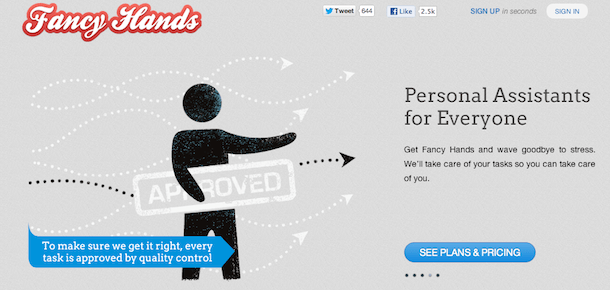
Last but not least is an NYC based startup called Fancy Hands which aims to make personal assistants accessible for anyone. They tackled their startup marketing quite well and could have most likely drummed up enough business from their Mashable post alone, but they got a much larger reach in the end. The main reason I picked them as the third in my list is because of how they got a lot of links and startup buzz simply because they’re an NYC based company. For example:
– http://nytm.org/made-in-nyc
– http://thenextweb.com/microsoft-ie9/2012/06/01/new-york-tech-scene/
– http://www.timeinc.com/pressroom/10nycstartups.php
Every business is going to have their sub-niches to work out links and buzz from, so make sure you identify what those are. Since Fancy Hands had such a unique product as well, it certainly helped them get exposure on the usual tech blogs. What I love about getting a mention on sites like Tech Crunch or Mashable is the fact that all the smaller tech blogs will pick up the story and cover it as well. I just picked a random chunk of their link profile thanks to Open Site Explorer and you can see what I mean:

All in all, they had an excellent launch for their company, and having an innovative product should help lead them down a successful path as well. Their link profile is definitely worth diving into for a better look at who and what picked up their news at launch. This can lead to discovering the actual “time path” of how their news/buzz started and how it spread throughout the blogosphere.
Tagged Brand Building, Link Building


